
MODERN FINANCE
Finance defines how the company performs
Finance sees growth, margin, cash and risk — and shapes them at the moment decisions are made. Economics are applied across every decision, and not just reviewed after quarter end.
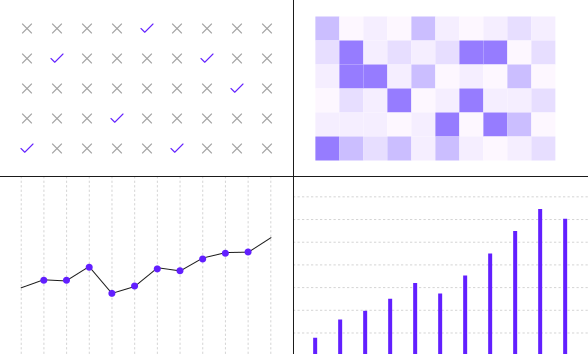
What’s broken today
Finance is responsible for outcomes it does not control.

You own margin but not pricing or deals
You own cash but not hiring or spend
You own forecasts, but inputs arrive late and fragmented
You manage risk, but exposure is created before you see it
Finance carries accountability without control.
What we put in place
A shared system that applies economics, signals and guardrails across every decision.

Shared model
One model for customers, segments and lifecycle across the company.

Embedded economics
Unit economics and thresholds applied inside deals, spend and hiring.
Signals and guardrails
Real-time signals and rules guide decisions across all teams.
Forward intelligence
Live view of revenue, margin and cash across the full lifecycle, in all tools.
How financial control works
Finance defines targets, thresholds and guardrails — the system applies them across every tool and decision.

Directional control
Apply financial rules across every decision

“This deal falls below margin threshold — adjust pricing or structure.”

Trade-offs
Evaluate decisions against full financial impact
“Increasing discount improves conversion, but reduces payback by 4 months.”

Risk and confidence
See where outcomes become uncertain
“Expansion confidence drops below 60% after month 12.”

What needs to change
Know exactly what to adjust to stay on track
“To meet margin target, reduce CAC in Segment B by 15%.”
How teams work with it
Intelligence is embedded in your existing tools — no new systems, no extra workflows

Sales
Sees margin and lifecycle impact before closing deals.
Marketing
Targets segments based on lifecycle ROI.

Customer teams
Prioritize expansion based on value and cost-to-serve.

Finance
Sets guardrails and sees impact instantly across all decisions.
What this changes

Shape deals
Margin thresholds influence pricing before revenue locks in.

Control acquisition
Lifecycle ROI shapes who marketing attracts and sales prioritizes.

See runway live
Cash updates instantly as hiring, spend and growth shift.

Surface risk early
Expansion weakness and churn risk appear before results move.

Allocate capital
Investment shifts based on forward economics, not historical averages.
What you see
Live forward P&L
Margin and contribution update as deals and hiring change
Always-ready forecasts
Forecasts are live, model-ready and board-ready at any moment
Live runway visibility
Cash exposure adjusts instantly as assumptions change
Segment economics clarity
Profitability appears before scale, not after

Complete visibility, on demand
Finance gains a living, forward view of the entire revenue system — across growth, margin, cashflow, segments and lifecycle economics. Conversational scenarios and instant modelling turn questions into clarity — immediately, across the whole company.
What this enables

Profitability at source
Unit economics are applied in every deal, hire and investment.

Continuous financial control
Margin, cash and risk are shaped in real time, not reviewed later.

Forecasts that hold
Forecasts reflect real decisions, not stitched assumptions.

Natural alignment
Teams follow financial guardrails automatically.

What disappears
Entire categories of operational friction fade away:

Forecast rebuild cycles

End-of-quarter panic

Margin debates after the fact

Manual alignment meetings
Surprises that “should have been visible”
Finance is no longer a reporting function
It becomes the system that defines how the company performs.